Pressure ulcers
Pressure ulcers are areas of damage to the skin and the tissue underneath. This happens when an area of skin is put under pressure.
Pressure ulcers can also be known as pressure sores or bed sores.
You’re more likely to get pressure ulcers if you have difficulty moving. For example, if you’re confined to lying in a bed or sitting for long periods of time.
Symptoms of pressure ulcers
Pressure ulcers usually form on bony parts of the body that aren’t covered with much body fat. This includes areas like the heels, elbows, hips and tailbone.
Symptoms include patches of skin that:
- are discoloured and don’t change colour when pressed – the patches are usually red on white skin, or purple or blue on black or brown skin
- feel warm, spongy or hard
- become painful
Pressure ulcers usually come on gradually, but sometimes appear quite quickly.
Sometimes pressure ulcers can blister or become an open wound. If aren’t treated they’ll continue to get worse, and might deepen to reach muscle or bone.
When to get medical advice
Ask your GP for an urgent appointment or phone 111 if:
You or someone you care for have symptoms of a pressure ulcer and:
- hot, swollen or red skin – it can look purple or blue on brown or black skin
- pus coming out of the ulcer
- a high temperature
- severe pain or pain that’s getting worse
Speak to your GP practice if:
- you think you or someone you care for has a pressure ulcer
Who’s most at risk of pressure ulcers?
Pressure ulcers can happen to anyone, but it’s more common if you have problems moving. This is because the weight of your body puts pressure on the same areas of skin which can damage it.
You have a higher chance of getting a pressure ulcer if you have:
- problems moving
- had a pressure ulcer before
- been seriously ill in intensive care
- recently had surgery
- swollen, sweaty or broken skin
- poor circulation
- fragile skin
- problems feeling sensation or pain
It’s also more likely if you’re underweight.
Severity of pressure ulcers
Pressure ulcers can vary in severity.
Healthcare professionals in Scotland use a grading system to describe how severe pressure ulcers are. In other places, a category or staging system may be used.
The higher the grade or category, the more severe the pressure ulcer is.
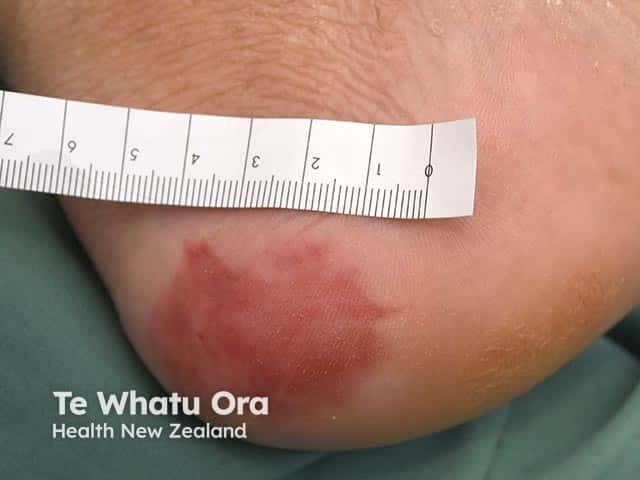
Grade 1
A grade 1 pressure ulcer is the least severe type of ulcer.
A grade 1 pressure ulcer may:
- be painful
- feel warm or cool
- feel either warm and spongy, or hard
- cause the affected area of skin to become discoloured
It may not:
- turn white when pressed
- have an open wound
This stage of pressure ulcer might be difficult to detect in darker skin tones.
Grade 2
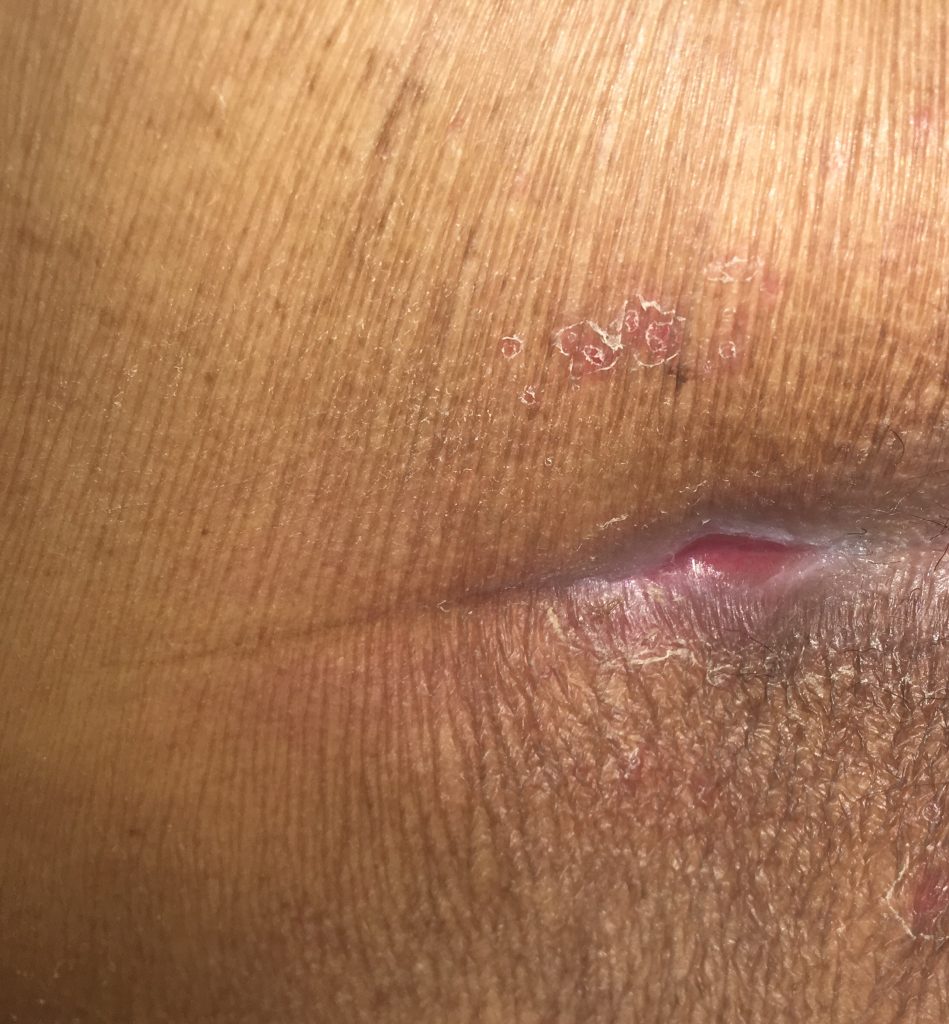
In grade 2 pressure ulcers, some of the outer surface of the skin (epidermis) or the deeper layer of skin (dermis) is damaged. This can lead to skin loss.
The ulcer looks like an open or burst blister. This can be red or pink. It won’t have any yellow or white in the wound.
Grade 3
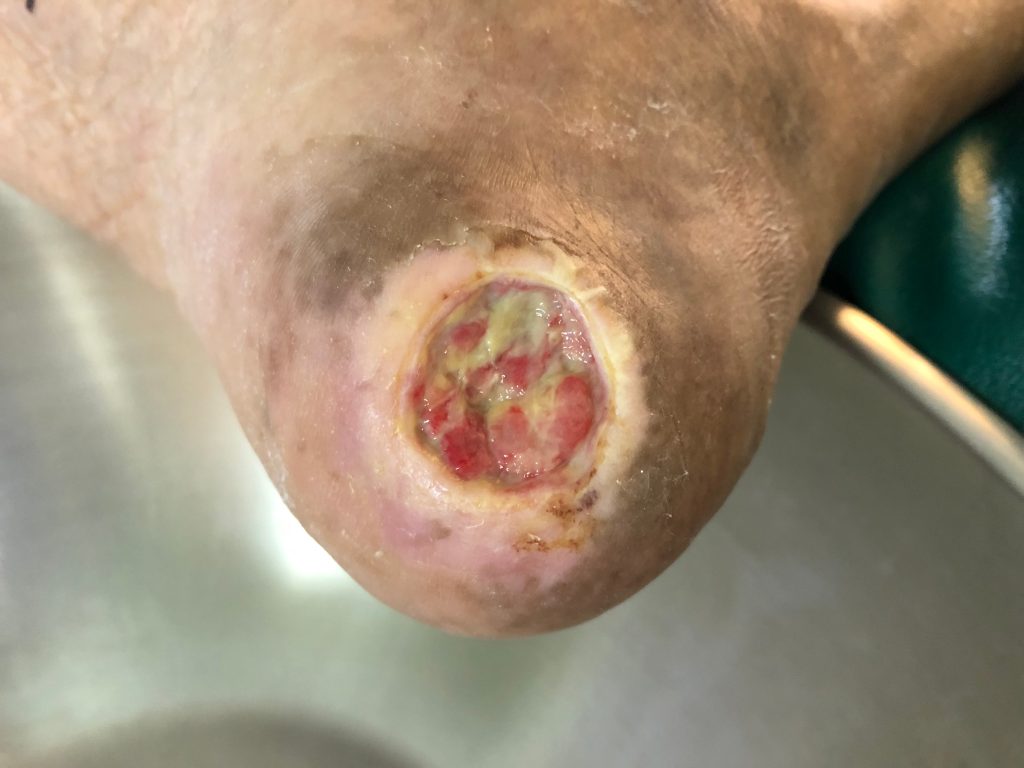
In a grade 3 pressure ulcer, skin loss can affect the entire thickness of the skin. The tissue underneath is also damaged, but the bone, muscle or tendon are not.
The ulcer looks like a deep wound and there might be signs of of dead tissue. For example, there may be white, yellow or green discharge coming from the wound.
Grade 4
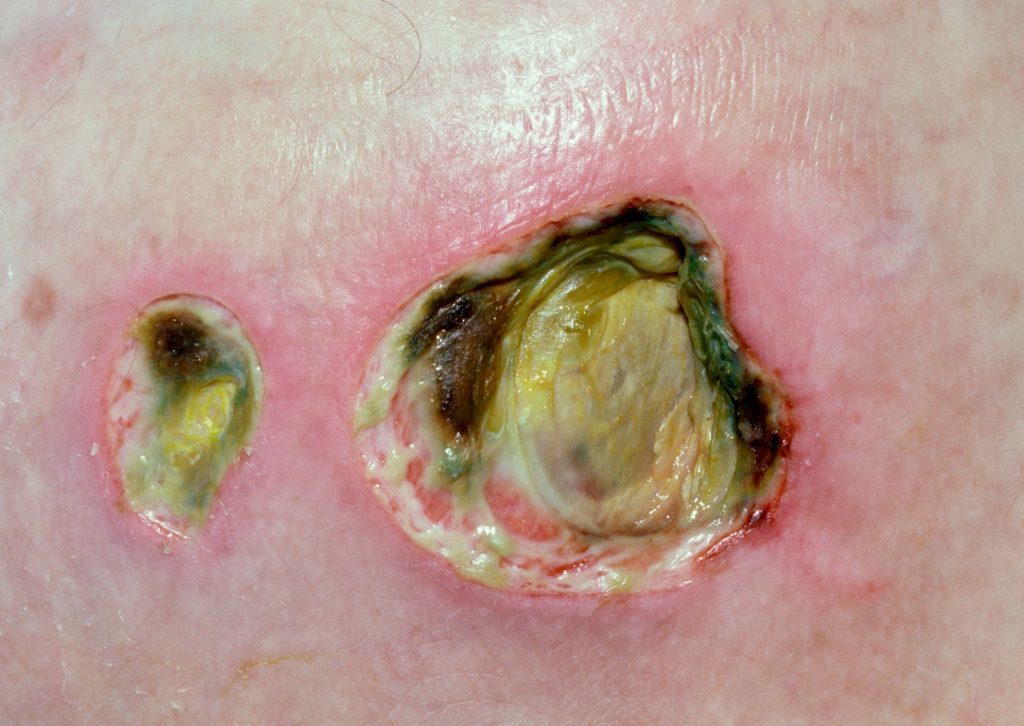
A grade 4 pressure ulcer is the most severe type of pressure ulcer.
The skin is severely damaged and the tissue around it begins to die. This is called tissue necrosis. The bone, muscles or tendons underneath may be damaged.
People with grade 4 pressure ulcers have a high risk of developing an infection.
Suspected deep tissue injury (SDTI)
A SDTI occurs when the top layer of the skin isn’t broken, but it’s thought there’s a problem underneath the skin.
A SDTI may mean:
- the surface of the skin isn’t broken
- the skin is purple or brownish red
- there’s a blister filled with blood
- the skin breaks down and causes deep tissue loss
- the depth of the wound isn’t known
Ungradable/unstageable
An ungradable or unstageable pressure ulcer means the area is covered by dead body tissue. Healthcare professionals won’t be able to tell how deep the wound is. They may be able to find out what grade or category the pressure ulcer is after dead tissue has been removed.
Mucosal pressure ulcer
Mucosal pressure ulcers affect soft and delicate areas of the body (mucosal membranes) like:
- tongue
- nostrils
- mouth
Mucosal membranes can’t be graded because they don’t have layers of skin like the rest of the body. This means they’re called mucosal pressure ulcers.
Diagnosing pressure ulcers
Pressure ulcers can be diagnosed by looking at the affected area. However, it’s better to prevent ulcers from developing in the first instance.
To help find out if you’re at risk of pressure ulcers, healthcare professionals will look at:
- your general health
- your ability to move
- whether you have any problems that affect your posture
- whether you have any symptoms of an infection
- your mental health
- whether you’ve had pressure ulcers before
- whether you have urinary incontinence or bowel incontinence
- your diet
- how well your blood circulation system is working
You may also be referred for other tests.
Checking for pressure ulcers
If you’re at risk of pressure ulcers, check for areas on your skin that are:
- discoloured
- feel unusually spongy or tough
Use a mirror to check parts of your body that can be difficult to see, like your back or buttocks.
Contact your GP or your healthcare team if you notice any signs of damage.
Treatment for pressure ulcers
The type of treatment you get will depend on how severe the pressure ulcer is.
Changing position and moving regularly is important to help relieve pressure on the ulcers. It can also help to stop new ones from forming.
Other treatments include:
- specially designed mattresses and cushions
- dressings to protect the ulcer and help it heal
- creams and ointments
- antibiotics (if the ulcer is infected)
- cleaning the ulcer
If the pressure ulcer is severe or other treatments haven’t worked, you may need to have surgery. This is to clean and close the ulcer.
How quickly do pressure ulcers heal?
How quickly pressure ulcers heal will be different for everyone.
It can depend on:
- your treatment plan
- how severe the ulcer is
- your nutrition
- if there’s an infection
- if you have any other health conditions
If you’re worried that you ulcer isn’t healing, speak to a healthcare professional.
What causes pressure ulcers?
Pressure ulcers are caused by something putting pressure on your skin. It can also happen if something rubs the skin. For example, a bed or a wheelchair.
How to prevent pressure ulcers
There are things that can help lower your chances of getting a pressure ulcer.
Do
- change position regularly
- use specially designed mattresses and cushions
- keep skin as clean and dry as possible
- check your skin every day for symptoms of a pressure ulcer
- try to stay active, if possible
- eat a healthy, balanced diet
Don’t
- do not smoke
Complications of pressure ulcers
Pressure ulcers can become infected.
There are different types of infection, including:
- cellulitis
- sepsis
- bone and joint infections
Other complications of pressure ulcers can include:
- pain
- distress
- longer hospital stays
- reduced quality of life

Last updated:
09 February 2026